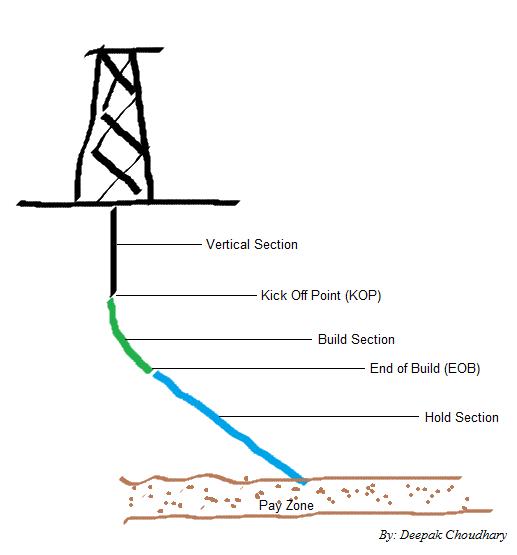
Pendulum BHA
A Pendulum BHA is designed to reduce (drop) well inclination.
Basic Principle
The first stabilizer is placed far above the bit, leaving unsupported drill collars below it.
Due to gravity, these unsupported collars hang like a pendulum and create a side force on the bit that tends to drill downward, reducing inclination.
Typical Configuration
Bit → Drill Collars (no near-bit stabilizer) → First Stabilizer → Additional Stabilizers → Drill Collars
How It Works
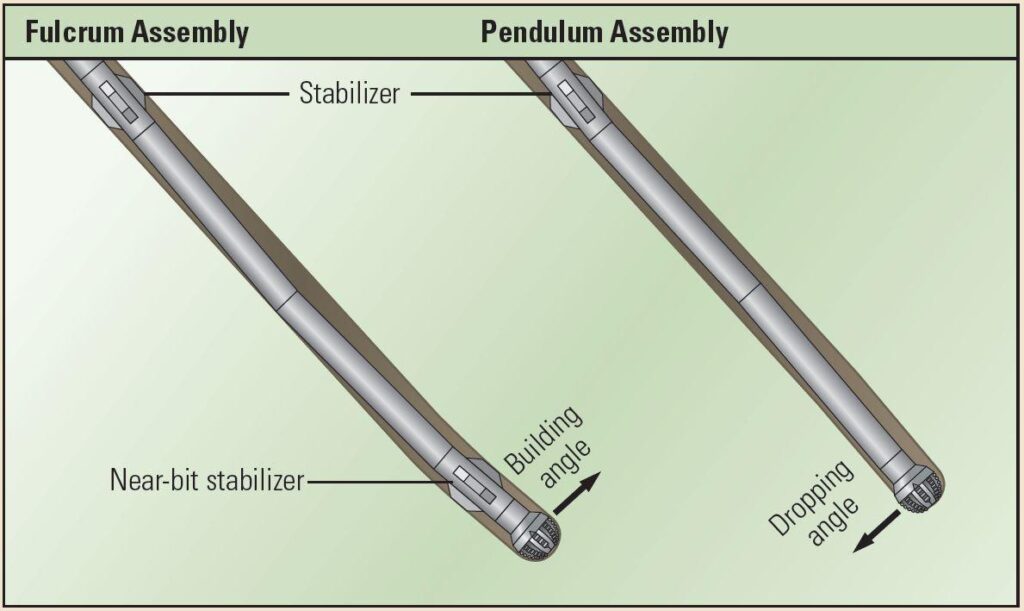
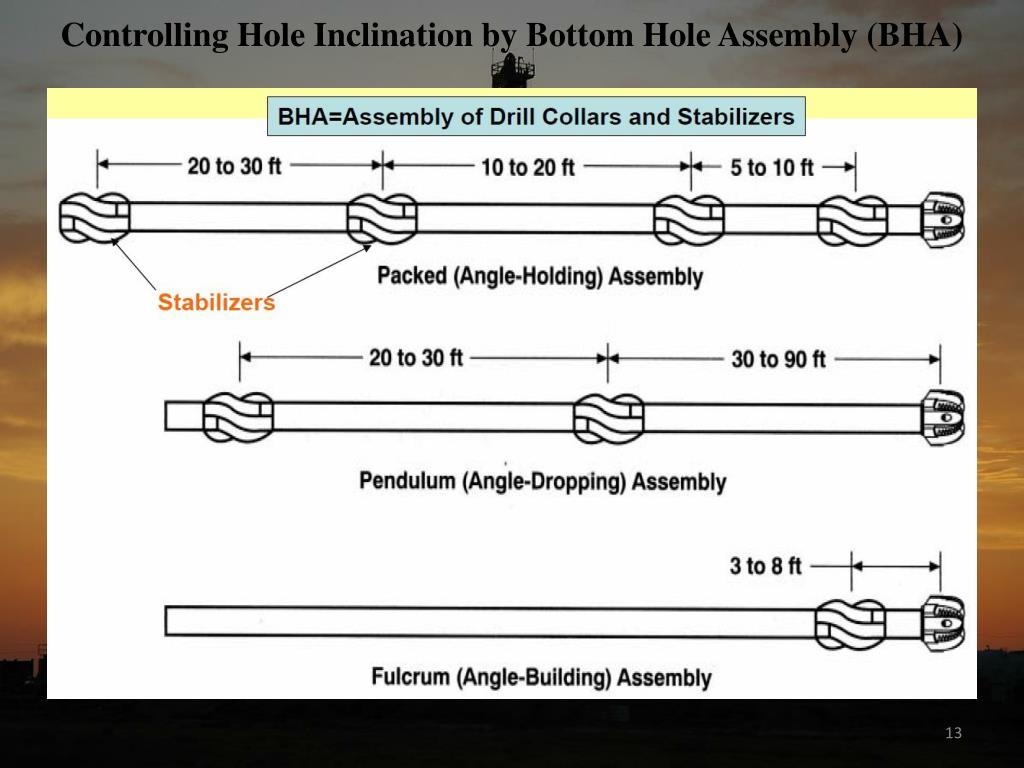
- Without a near-bit stabilizer, the collars sag under their own weight.
- Gravity pulls the collars toward the low side of the hole.
- This generates a force at the bit that causes the well to drop angle.
When Is It Used?
- To reduce excessive inclination.
- To bring the well back toward vertical.
- In correction runs where angle needs to be decreased.
Advantages
✔ Effective for dropping angle.
✔ Simple design.
✔ No special directional tools required.
Disadvantages
✘ Lower ROP in some formations.
✘ Less effective in high-angle wells.
✘ Can increase hole tortuosity if not controlled.
Comparison
| BHA Type | Effect on Inclination |
|---|---|
| Packed BHA | Hold angle |
| Pendulum BHA | Drop angle |
| Fulcrum BHA | Build angle |
Interview Question
Q: Why does a Pendulum BHA drop angle?
A: Because the first stabilizer is placed well above the bit, the unsupported drill collars below it sag due to gravity. This pendulum effect creates a force on the bit that directs drilling toward lower inclination, causing the well to drop angle.