Fulcrum BHA
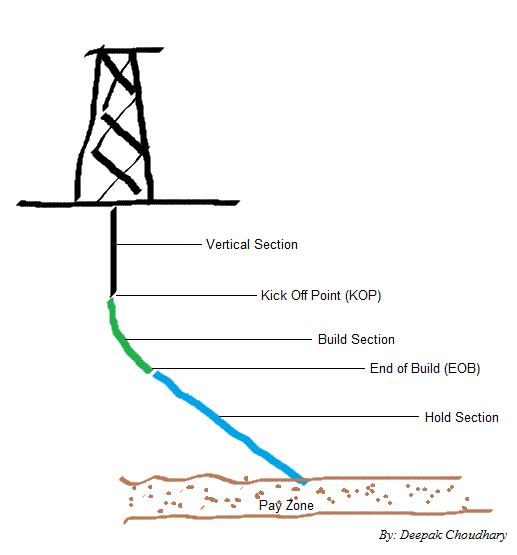
A Fulcrum BHA is designed to build inclination (increase angle).
Basic Principle
A near-bit stabilizer is placed close to the bit, while the next stabilizer is positioned farther up the BHA. The near-bit stabilizer acts as a pivot point (fulcrum).
When weight on bit (WOB) is applied, the drill collars bend around this pivot, creating an upward side force at the bit that causes the well to build angle.
Typical Configuration
Bit → Near-Bit Stabilizer → Drill Collar → (Long spacing) → String Stabilizer → Drill Collars
How It Works


- Near-bit stabilizer provides a pivot point.
- Drill collars bend between stabilizers.
- The bit is pushed toward the high side of the hole.
- Inclination increases (builds angle).
When Is It Used?
- Building angle after the KOP (Kick-Off Point).
- Increasing inclination in directional wells.
- Correcting a well that is below planned inclination.
Factors Affecting Build Rate
- Weight on Bit (higher WOB → more build tendency).
- Stabilizer spacing.
- Hole size vs stabilizer size.
- Formation characteristics.
- Drill collar stiffness.
Advantages
✔ Builds angle without a motor.
✔ Simple and economical.
✔ Useful in directional drilling.
Disadvantages
✘ Build rate is less predictable than with a mud motor or RSS.
✘ Sensitive to WOB and formation changes.
✘ Can create higher dogleg severity if not controlled.
Quick Interview Summary
| BHA Type | Effect |
|---|---|
| Packed BHA | Hold angle |
| Pendulum BHA | Drop angle |
| Fulcrum BHA | Build angle |
Interview Question:
Q: Why is it called a Fulcrum BHA?
A: The near-bit stabilizer acts like a fulcrum (pivot point). When WOB is applied, the collars bend around this point and generate a side force at the bit, causing the well to build inclination.