Source Note
This blog post is a summary of the book:
- Title: Notes on Indian History (664–1858)
- Author: Karl Marx
- First Published: 1906 (compiled and published posthumously from Karl Marx’s historical writings)
- Publisher: N.C. Ray, Calcutta (later reprinted by various publishers)
This article is intended for educational and reference purposes only. All credit for the original historical analysis goes to Karl Marx.
Part 1: From the Early Muslim Conquests to the Mughal Zenith (664–1707)
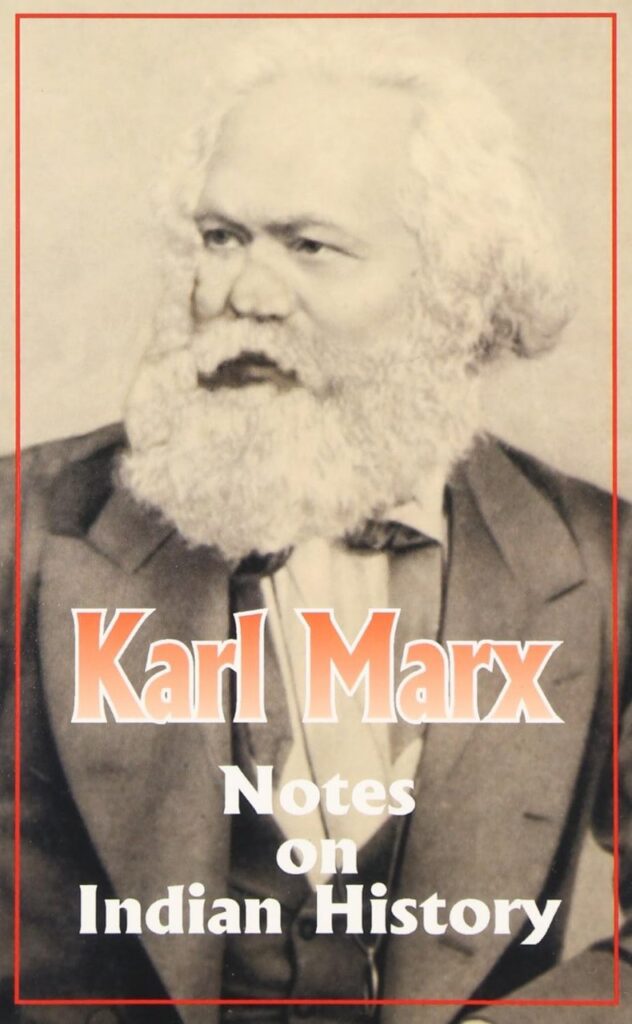
📖 This is the cover of Karl Marx’s book Notes on Indian History (664–1858), first published in 1906. The book traces India’s history from early Muslim invasions to the Revolt of 1857, reflecting Marx’s perspective on India’s political and colonial past.
Introduction
Karl Marx’s Notes on Indian History (664–1858) traces the transformation of India from the early Muslim invasions to the British conquest. This first section (664–1707) covers more than a millennium of change – beginning with Arab raids in Sindh, the rise and fall of Delhi Sultanate dynasties, and culminating in the glory and decline of the Mughal Empire under Aurangzeb.
It is a story of invasions, dynasties, cultural synthesis, and conflicts that shaped the subcontinent’s destiny.
1. Early Muslim Invasions (664–1206)
(Chapters: Mussulman Conquest; Mahmud of Ghazni; House of Ghur)
- First Arab Incursions (7th–8th Century):
- After Prophet Muhammad’s death (632), Arab armies swept across Persia, Central Asia, and reached the Indian frontier.
- In 711, Muhammad bin Qasim conquered Sindh. Though Arab rule here was short-lived, Sindh became a frontier province of the Caliphate.
- Ghaznavid Expansion (10th–12th Century):
- Founded by Alptegin and Sabuktigin, Ghazni grew into a strong state.
- Mahmud of Ghazni (999–1030): Known as the “Idol Breaker,” he invaded India 17 times. He plundered temples at Mathura, Kannauj, and Somnath, carrying immense wealth back to Ghazni.
- His raids weakened northern Indian kingdoms but did not establish permanent rule.
- Ghurid Conquest (12th Century):
- After Ghaznavids declined, Muhammad Ghori advanced into India.
- Battle of Tarain (1191–1192): First, Prithviraj Chauhan defeated Ghori, but in the second battle, Ghori won decisively, opening the way for Muslim rule.
- Ghori’s general Qutb-ud-din Aibak captured Delhi, laying the foundation of the Delhi Sultanate (1206).
2. The Delhi Sultanate (1206–1526)
(Chapters: Slave, Khilji, Tughlaq, Sayyid, and Lodi Dynasties)
The Sultanate lasted for over 300 years, ruled by five dynasties:
Slave (Mamluk) Dynasty (1206–1290)
- Founded by Qutb-ud-din Aibak, followed by Iltutmish, who consolidated power.
- Razia Sultan (1236–1240): The only female ruler of Delhi. Her reign was short due to opposition from nobles.
- Frequent Mongol threats tested the dynasty.
Khilji Dynasty (1290–1321)
- Jalaluddin Khilji began the dynasty, succeeded by Alauddin Khilji.
- Alauddin’s Achievements:
- Expanded empire into Gujarat, Malwa, and Deccan.
- His general Malik Kafur plundered southern India up to Madurai.
- Introduced strict price control system and market regulation in Delhi.
- Strengthened the army to check Mongols.
Tughlaq Dynasty (1321–1414)
- Ghiyasuddin Tughlaq founded the dynasty.
- Muhammad bin Tughlaq (1325–1351): Known for ambitious but disastrous schemes:
- Shifted capital from Delhi to Daulatabad.
- Issued token currency, which failed miserably.
- Dreamed of conquering Persia and China.
- Firuz Shah Tughlaq (1351–1388): Built canals, schools, and cities, but empire weakened.
- Timur’s Invasion (1398): The Central Asian conqueror sacked Delhi, massacring thousands. Delhi never fully recovered.
Sayyid Dynasty (1414–1450)
- Puppet rulers who survived mainly due to Timur’s legacy. Controlled only Delhi and surroundings.
Lodi Dynasty (1450–1526)
- Afghan origin; Bahlul Lodi expanded territory, succeeded by Sikandar and then Ibrahim Lodi.
- Ibrahim’s autocracy alienated nobles. In 1526, he faced Babur in the First Battle of Panipat, where artillery gave Babur victory.
3. Foundation of the Mughal Empire (1526–1556)
(Chapters: Babur & Humayun)
- Babur (1526–1530):
- A descendant of Timur and Genghis Khan from Ferghana (Central Asia).
- Defeated Ibrahim Lodi at Panipat using artillery and mobile cavalry.
- Defeated Rana Sanga at Khanwa (1527), consolidating Mughal rule.
- Left a rich autobiography (Baburnama).
- Humayun (1530–1556):
- Weak and indecisive. Lost to Sher Shah Suri, who established the Sur Empire.
- Sher Shah reformed revenue, introduced standardized coinage, and built the Grand Trunk Road.
- Humayun regained the throne with Persian help but died soon after (1556).
4. The Great Mughals (1556–1658)
(Chapters: Akbar, Jahangir, Shah Jahan)
Akbar (1556–1605): The Empire Builder
- Defeated Hemu at the Second Battle of Panipat (1556).
- Conquered Gujarat, Bengal, Kashmir, and parts of the Deccan.
- Administration:
- Introduced Mansabdari system (ranking officers).
- Revenue reforms under Raja Todar Mal.
- Religious Policy:
- Abolished jizya (tax on non-Muslims).
- Promoted Din-i-Ilahi, a syncretic faith.
- Patronized arts and translation of Sanskrit texts.
- Akbar is remembered as one of India’s greatest rulers.
Jahangir (1605–1627): The Patron of Arts
- Loved painting and gardens.
- His court witnessed the arrival of English envoys like Sir Thomas Roe.
- Struggled with rebellions by Afghan chiefs and Rajputs.
Shah Jahan (1628–1658): The Builder Emperor
- Constructed the Taj Mahal, Red Fort, and Jama Masjid.
- Expanded empire into Deccan and Central Asia.
- His reign marked the cultural zenith of the Mughals, but wars drained the treasury.
5. Aurangzeb and the Strains of Empire (1658–1707)
(Chapters: Reign of Aurangzeb and Rise of Marathas)
- Aurangzeb (1658–1707):
- Deposed his father Shah Jahan and imprisoned him.
- Expanded empire to its greatest size – conquering Bijapur and Golconda.
- Re-imposed jizya tax, enforced orthodox Islamic policies.
- Suppressed music and arts, which alienated elites.
- Challenges During His Reign:
- Marathas: Under Shivaji, Marathas rose as a powerful force using guerrilla warfare. Shivaji built a navy and forts. After his death (1680), Sambhaji and Rajaram continued resistance.
- Sikhs: Guru Tegh Bahadur was executed by Aurangzeb. Guru Gobind Singh created the Khalsa (1699), transforming Sikhs into warriors.
- Rajputs: Relations soured after Aurangzeb interfered in succession disputes of Mewar and Marwar.
- Death of Aurangzeb (1707):
- Left an empire vast but overstrained, with empty treasuries and bitter enemies.
- His death marked the beginning of Mughal decline.
Conclusion
From the first Arab raids in Sindh (664) to the death of Aurangzeb (1707), India experienced:
- Continuous invasions from Central Asia.
- Establishment of Delhi Sultanate dynasties.
- The cultural and administrative brilliance of the Mughal Empire.
By 1707, the Mughal Empire appeared mighty but was internally fractured. This weakness invited new powers—Marathas, Sikhs, Afghans, and Europeans—who would dominate the 18th century.
Timeline: 664–1707 (Muslim Conquests to Aurangzeb)
664 AD – First Arab raid into Sindh (Multan).
711 AD – Muhammad bin Qasim conquers Sindh.
999–1030 – Mahmud of Ghazni invades India 17 times.
1191–1192 – Battles of Tarain: Prithviraj Chauhan defeats then loses to Muhammad Ghori.
1206 – Foundation of Delhi Sultanate (Slave Dynasty).
1290–1321 – Khilji Dynasty: Alauddin expands into Gujarat, Malwa, Deccan.
1325–1351 – Muhammad bin Tughlaq’s ambitious but failed policies.
1398 – Timur invades and sacks Delhi.
1451–1526 – Lodi Dynasty; end of Delhi Sultanate.
1526 – First Battle of Panipat: Babur defeats Ibrahim Lodi → Mughal Empire founded.
1556 – Second Battle of Panipat: Akbar secures throne.
1576 – Battle of Haldighati: Akbar defeats Maharana Pratap of Mewar.
1605–1627 – Reign of Jahangir.
1628–1658 – Reign of Shah Jahan; construction of Taj Mahal.
1658–1707 – Reign of Aurangzeb; expansion & Deccan wars.
1707 – Death of Aurangzeb → beginning of Mughal decline.
📊 Table of Key Battles (664–1707)
| Year | Battle | Opponents | Outcome & Significance |
|---|---|---|---|
| 711 | Arab Conquest of Sindh | Muhammad bin Qasim vs Raja Dahir | Arabs establish rule in Sindh, limited spread of Islam. |
| 1191 | First Battle of Tarain | Prithviraj Chauhan vs Muhammad Ghori | Hindu Rajputs defeat Ghori. |
| 1192 | Second Battle of Tarain | Same | Ghori wins; Delhi captured, start of Muslim rule in North India. |
| 1526 | First Battle of Panipat | Babur vs Ibrahim Lodi | Babur wins with artillery; Delhi Sultanate ends, Mughals begin. |
| 1527 | Battle of Khanwa | Babur vs Rana Sanga of Mewar | Babur victorious; consolidates Mughal rule in North India. |
| 1556 | Second Battle of Panipat | Akbar’s forces vs Hemu | Akbar secures throne with Bairam Khan’s leadership. |
| 1576 | Battle of Haldighati | Akbar vs Maharana Pratap | Mughal tactical victory; Rajput resistance continues. |
| 1658 | Battle of Samugarh | Aurangzeb vs Dara Shikoh | Aurangzeb wins → becomes emperor. |
| 1674–1680s | Maratha-Mughal Wars | Shivaji & Marathas vs Aurangzeb | Guerrilla tactics weaken Mughals. |
| 1707 | Deccan Campaigns | Aurangzeb vs Marathas | Aurangzeb dies in the Deccan, leaving empire exhausted. |